Quality, Health, Safety & Environment
Our commitment to our people, our clients and the places where we work.
Zero Harm: no harm to people, no damage to the environment
QHSE is not a department at ICON. It is how we plan, build and lead on every project, from mobilization to handover.
We believe every incident is preventable. Our management team is personally accountable for QHSE performance, and every person on our sites, whether employee, subcontractor or visitor, works to the same standards and has the same authority to stop unsafe work.
We comply with all applicable laws and client requirements as a minimum, and apply the more stringent standard wherever they differ.
Four commitments on every project
Harm to people
No injuries or occupational illness to anyone on or around our work.
Environmental incidents
No spills, uncontrolled releases or damage beyond the permitted work area.
Defects
Built right the first time, to specification, with complete records.
Compromise
No schedule or cost pressure ever justifies an unsafe act.
A culture where everyone goes home safe
Strong safety performance comes from visible leadership, competent people and work that is planned before it starts.
Stop Work Authority
Every person on site has the right and the duty to stop any task they believe is unsafe, without fear of reprisal. Work resumes only when the concern has been resolved, and every stop is recognized, not questioned.
Visible Leadership
Managers and supervisors lead safety from the front line through regular site walks, safety conversations and leadership engagement with crews, subcontractors and the client.
Plan Before You Work
- Hazard identification and risk assessment at project, task and crew level
- Job hazard analysis (JHA) and permit-to-work for all high-risk activities
- Daily toolbox talks and pre-task briefings
Competent People
- Site induction for every worker and visitor
- Role-specific training and competence verification
- Qualified operators, riggers, welders and supervisors
Health & Welfare
- Fitness-for-duty, drug and alcohol, and fatigue management
- Heat, cold and remote-site welfare controls
- Medical support and emergency evacuation planning
Learning from Every Event
- Reporting of all incidents, near misses and observations
- Root cause investigation and corrective actions
- Lessons learned shared across all projects
Non-negotiable rules for high-risk work
Our Life-Saving Rules follow the IOGP Life-Saving Rules used across the oil and gas industry, with an added rule for ground disturbance. They address the activities most likely to cause serious injury in pipeline construction and apply to everyone, every time.
Bypassing Safety Controls
Obtain authorization before overriding or disabling safety controls, equipment or barriers.
Confined Space
Enter only with a permit, gas testing and a standby person.
Driving
Wear seatbelts, obey speed limits, never use a phone while driving and only drive when fit and rested.
Energy Isolation
Verify isolation and zero energy before work begins.
Hot Work
Control flammable material and ignition sources, and work under a hot work permit.
Line of Fire
Keep clear of moving equipment, pressurized lines and swinging or falling loads.
Safe Mechanical Lifting
Follow the lift plan, control the area and never walk or stand under a suspended load.
Work Authorization
Work with a valid permit when one is required.
Working at Height
Use fall protection whenever working above the height set by site rules (typically 1.8 m / 6 ft).
Ground Disturbance
Locate and positively identify buried pipelines and services before any mechanical excavation; never enter a trench without approved protection.
Every task planned, every hazard controlled
Before work starts, each crew breaks the job into steps, identifies what could go wrong and agrees how it will be controlled. These Job Hazard Analyses (JHAs) are reviewed at the daily toolbox talk, submitted and updated whenever conditions change.
Mobilization & Site Preparation
Hazards
Unfamiliar site conditions, unauthorized entry, collisions between people and heavy equipment.
Controls
- Site induction for every worker and visitor
- Permit-to-work system
- Barricaded exclusion zones and high-visibility clothing
- Daily toolbox talks
Excavation & Trenching
Hazards
Trench collapse, striking buried utilities, falls into the trench, toxic or flammable gas.
Controls
- Survey and locating of underground services before digging
- Hand or vacuum excavation near located services
- Shoring, sloping or benching to suit the ground
- Spoil kept back from the trench edge
- Gas testing before entry
- Ladders and safe access and egress
Stringing & Bending
Hazards
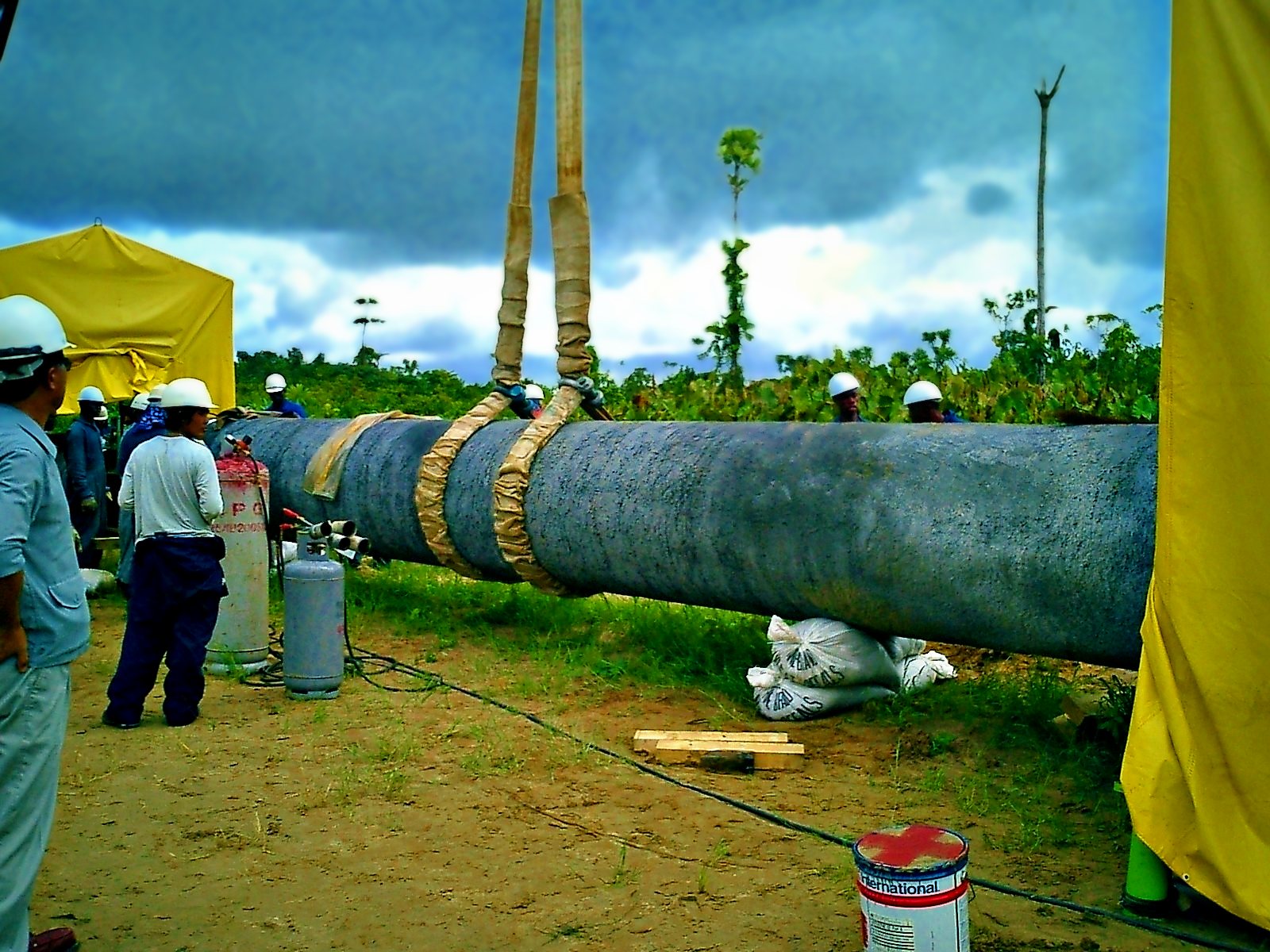
Pinch points, pipe rolling off skids, dropped loads from cranes and sidebooms, manual handling injuries, equipment swing radius.
Controls
- No entry into the swing radius of operating equipment
- Certified riggers, lift plans and taglines
- Chocks and blocking to secure pipe on skids
- Mechanical lifting aids for heavy items
Welding, Cutting & Grinding
Hazards
Fire and explosion, flash burns and backfire, welding fumes, electric shock.
Controls
- Hot work permits
- Flashback arrestors on cutting torches and cylinders
- Fire extinguishers at every work front
- Correct machine grounding, fume extraction and full welding PPE
Tie-Ins & Pressure Testing
Hazards
Incorrect isolation, release of residual product or gas, rupture under test pressure.
Controls
- Lockout/tagout and isolation certificates attached to the permit
- Verified purging and gas-free testing
- Exclusion zones during pressure tests
- Calibrated gauges and continuous monitoring
Environment & Spill Prevention
Hazards
Fuel and oil leaks from generators, compressors, pumps and heavy equipment.
Controls
- Secondary containment under stationary equipment
- Spill kits at every work front and refueling point
- Daily equipment inspections
Built right, documented completely
Our quality management system covers every stage of construction, from procedure qualification to final handover.
- Project quality plans and inspection and test plans agreed with the client
- Qualified welding procedures (WPS/PQR) and qualified welders tested to the project standard
- Non-destructive testing, coating inspection and holiday detection
- Full material traceability from receipt to installation
- Non-conformance control, corrective action and continual improvement
- Complete as-built records and turnover documentation
Leave the land as we found it
We plan our work to stay within permit conditions and minimize our footprint along the right-of-way.
- Compliance with environmental permits and project management plans
- Spill prevention, containment and response on every spread
- Waste segregation, minimization and licensed disposal
- Erosion and sediment control at slopes and water crossings
- Protection of wildlife, vegetation and cultural heritage
- Topsoil management and full reinstatement after construction
- Reduced fuel use, emissions, dust and noise
Subcontractors and supply chain
Our standards extend to everyone who works with us.
- QHSE pre-qualification and selection of subcontractors and suppliers
- Joint induction, risk assessment and interface management
- Regular audits, performance reviews and shared lessons learned
Measured, audited and always improving
We track leading and lagging indicators, audit our sites and systems, and review performance at management level to drive continual improvement.